
Global oil markets are under pressure, raising concerns about inflation and economic growth. However, history shows that oil price spikes alone do not determine whether a recession occurs. The broader economic environment is the key factor.
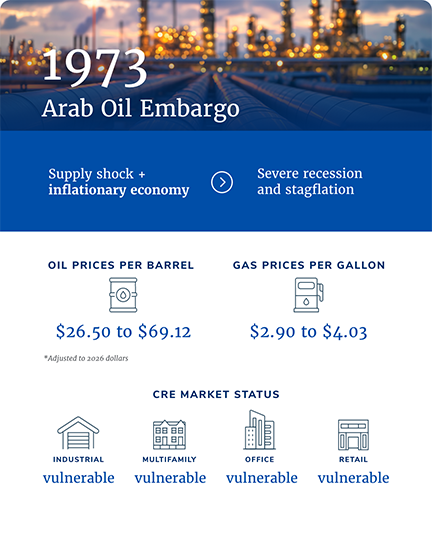
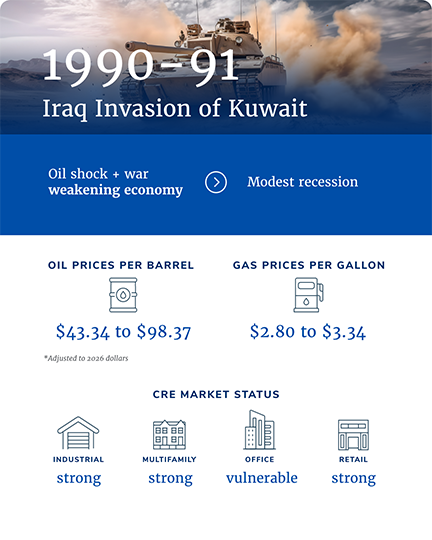
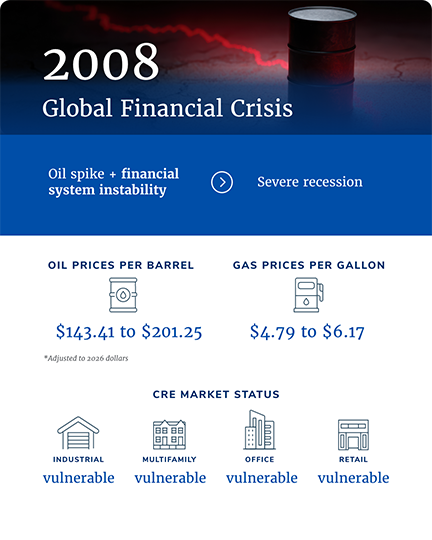
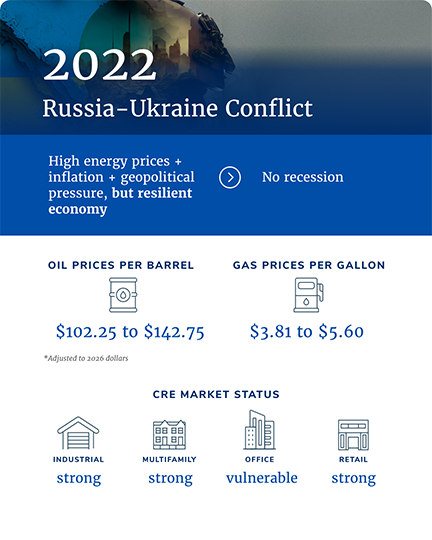
Four historical examples:
Across past decades, major oil shocks have produced very different outcomes, ranging from no recession to severe downturns. The difference was not just oil prices, but the strength of the underlying economy.

What do increased oil prices mean for us today?
Prolonged increases in oil prices can raise inflation, reduce consumer spending, and lead to tighter monetary policy—all of which can slow economic growth.
However, unlike the 1973 Arab Oil Embargo, the U.S. is now the world’s largest oil producer, accounting for about 20% of global supply. While this reduces the risk of physical oil shortages for the U.S., it does not insulate the U.S. economy from global pricing dynamics. This is because higher energy costs raise transportation, food, and production expenses, which reduces real incomes and consumer spending—particularly for lower-income households.
For example, following the 2022 energy price shock, Technomic estimated that every $0.50 increase in gasoline prices reduced consumer spending by about $68 billion, with leisure spending typically impacted first. And, according to the International Monetary Fund, a 10% increase in oil prices raises inflation by roughly 0.4% and reduces global GDP by 0.1% to 0.2%. So, if sustained, these effects can compound over time, slowing economic momentum.
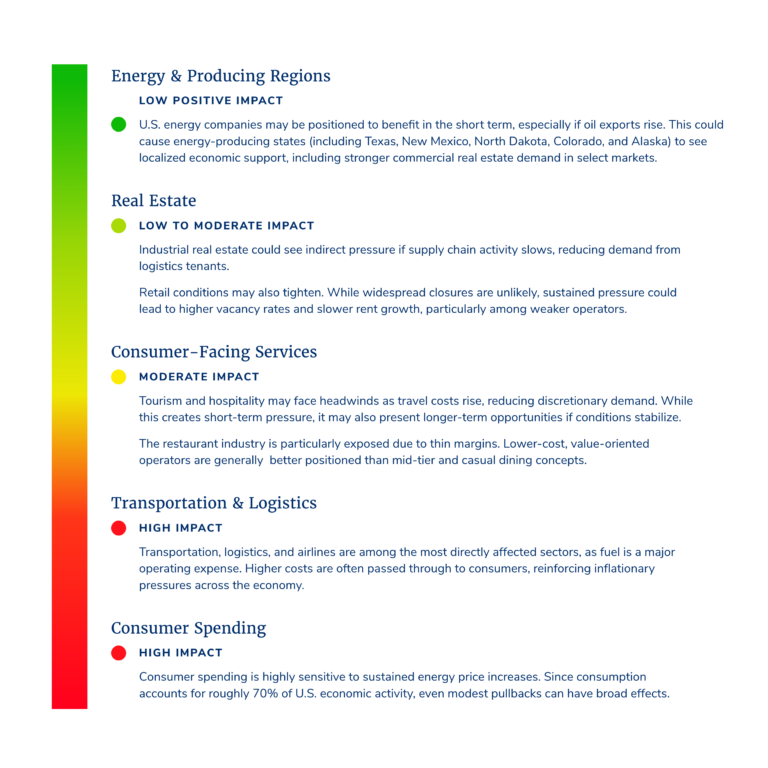
What sectors of the economy are impacted by higher oil prices?
The effects of higher oil prices are uneven, depending on exposure to energy costs and sensitivity to consumer demand.
What Now?
Oil markets are inherently volatile, but the scale and duration of price increases matter most. History shows that oil shocks alone rarely cause recessions—but they can accelerate one if underlying conditions are already weak.
The key question is not how high prices rise, but how long they remain elevated. If sustained, the combined effects on inflation, growth, and consumer behavior could materially weaken the broader economy over time.
The analysis above reflects the author’s independent views and does not constitute investment advice.